February 15, 2026
Revolutionizing Water Security in Manitoba's Remote Communities with Decentralized AWG-RO Innovation
Executive Summary
In Manitoba's remote northern communities, persistent drinking water advisories pose health risks, economic burdens, and daily hardships—despite federal commitments to eliminate them. As of February 2026, 5 long-term and 9 short-term advisories affect First Nations in the province, impacting thousands who rely on costly trucked or bottled water.
Aarvish Global LTD, an Indigenous-owned and Manitoba Métis Federation-registered company based in Winnipeg, addresses this through innovative, decentralized Atmospheric Water Generation (AWG) and Reverse Osmosis (RO) systems powered by renewables like wind and solar. This case study analyzes the Manitoba water crisis, our hybrid technology as a scalable solution, a hypothetical pilot project, and projected impacts—drawing from our business plan and engineering expertise.
Key Outcomes
- 8,000+ liters/day of clean water for 100–250 households.
- 70–80% reduction in trucking costs and emissions.
- Community empowerment via local training and ownership.
This innovation aligns with provincial priorities for climate-resilient infrastructure and Indigenous economic development, offering a path to water sovereignty.
The Problem: Manitoba's Ongoing Water Crisis in Remote First Nations
Manitoba, with its 100,000+ lakes, seems water-abundant—yet remote communities, especially First Nations, face chronic shortages. Fly-in reserves in the north endure harsh winters, limited access, and aging infrastructure, leading to frequent advisories.
Current Statistics (February 2026):
- Long-Term Advisories (lasting >1 year): 5 active in Manitoba, affecting communities like Mathias Colomb Cree Nation (boil water since 2020, impacting 400 homes), Shamattawa First Nation (since 2018, 170 homes), Tataskweyak Cree Nation (since 2017, 371 homes), Tootinaowaziibeeng Treaty Reserve (do not consume since 2023, 115 homes), and Waywayseecappo First Nation (do not consume since 2023, 80 homes). Projected lifts vary from Winter 2026 to undetermined.
- Short-Term Advisories: 9 ongoing, including Bunibonibee Cree Nation (Oxford House, cisterns affected since August 2025), Cross Lake (two systems since 2025), Fox Lake (since January 2026), Long Plain (since April 2025), Pauingassi (since March 2025), Pine Creek (lifted February 7, 2026), Sayisi Dene (Tadoule Lake, lifted February 4, 2026), and Waywayseecappo School (do not use since November 2025).
These advisories stem from contamination (e.g., bacteria, chemicals), equipment failures, or seasonal issues like freezing pipes. Impacts include:
- Health Risks: Exposure to waterborne illnesses; reliance on bottled water increases plastic waste.
- Economic Costs: Governments spend millions annually on emergency supplies—e.g., $24 million invested in Manitoba infrastructure in recent years, yet trucking costs $0.10–0.50/liter.
- Social Hardship: Daily burdens, especially in winter when ice roads fail, leading to evacuations or shortages.
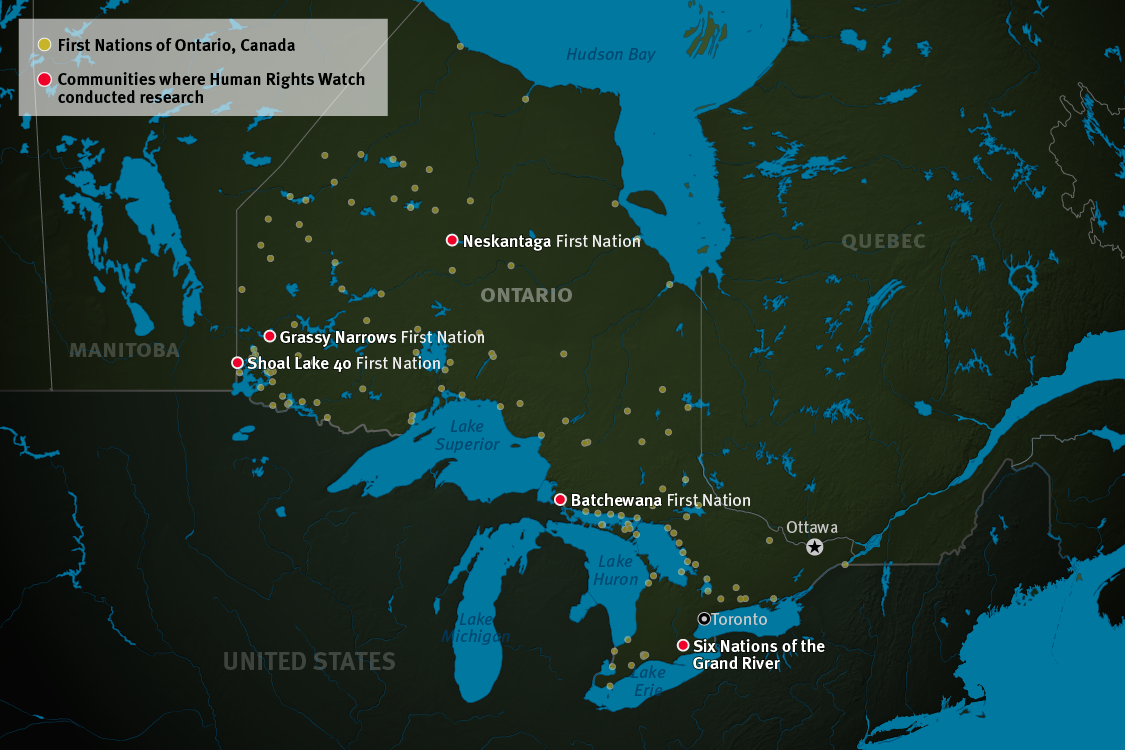
" Map highlighting affected First Nations in Ontario (similar issues in Manitoba), illustrating the regional scope of the crisis. "
Traditional centralized systems fail due to high construction costs, maintenance challenges, and climate vulnerabilities. "The water crisis is ongoing and costly," with residents paying inflated prices for basics like a $50 pack of bottled water in places like Island Lake.
The Solution: Aarvish's Decentralized AWG-RO Hybrid System
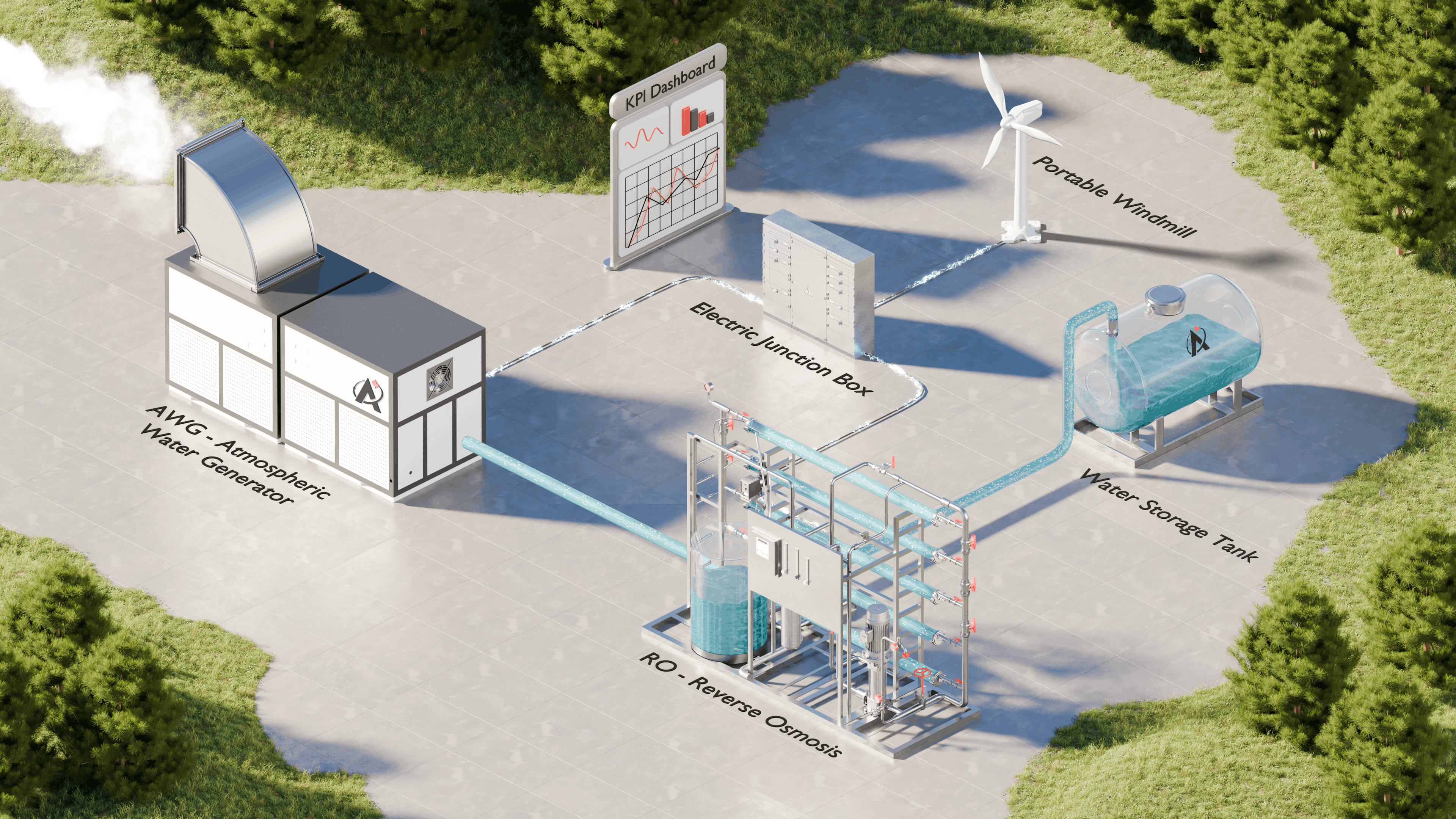
Aarvish Global LTD's innovation: Modular, off-grid systems combining AWG for drinking water and RO for household use, integrated with renewables for year-round reliability in -50°C conditions.
Core Components
- Atmospheric Water Generation (AWG): Extracts moisture from air via refrigeration/desiccant cycles, producing alkaline water (pH 9–10) with minerals. Optimized for low-humidity winters.
- Reverse Osmosis (RO): Purifies local sources (lakes/rivers) at high volumes, removing 95–99% contaminants.
- Renewable Power: Portable wind mills and solar hybrids generate electricity, reducing diesel dependency.
- Storage & Monitoring: Water tanks and IoT sensors ensure continuity and remote oversight.

Basic AWG process diagram: Air intake to condensate collection, scalable for hybrid setups.
This "practical, scalable solution" supports 100–250 households per unit, complements existing infrastructure, and promotes community ownership through training.
Project Analysis: Technical, Economic, and Environmental Feasibility
Technical Analysis:
- Adaptation to Manitoba Climates: Insulated designs and anti-freeze features maintain 60–80% efficiency in cold/dry air. Daily yield: 5,000–12,000 liters (summer peak) to 3,000–5,000 liters (winter).
- Modularity: Containerized for rapid deployment (weeks, not years); scales via stacking.
- Reliability: Hybrid redundancy—AWG for baseline, RO for volume—ensures no single failure point.
Performance Table
| Metric | AWG Component | RO Component | Hybrid System |
|---|---|---|---|
| Daily Output (Liters) | 1,000–5,000 | 5,000–15,000 | 8,000–20,000 |
| Energy Use (kWh/Liter) | 0.5–1.8 | 0.2–0.5 | 0.3–1.0 |
| Cold-Climate Uptime | 90%+ | 95%+ | 98%+ |
| Contaminant Removal | UV/HEPA/UV | 95–99% TDS | Full Spectrum |
Suggested Graph: Bar chart comparing yields across seasons—winter (desiccant boost) vs. summer.
Economic Analysis:
- Cost Savings: Upfront $300K–800K/unit; payback 2–4 years vs. trucking ($0.15–0.40/liter). Annual savings: $200K+ per community.
- ROI Projections: For a 200-household pilot: 70% reduction in emergency costs, creating 5–10 local jobs.
- Funding Alignment: Ties to federal/provincial grants for Indigenous-led clean tech.
Environmental Analysis:
- Sustainability: Renewables cut CO2 by 15–30 tonnes/year/unit; minimal water waste (RO brine reusable for non-potable).
- Climate Resilience: Reduces trucking emissions; adapts to droughts/floods.
- Impact Metrics: Province-wide scaling (50 units): 150M+ liters/year, equivalent to offsetting 1,000+ diesel trucks.
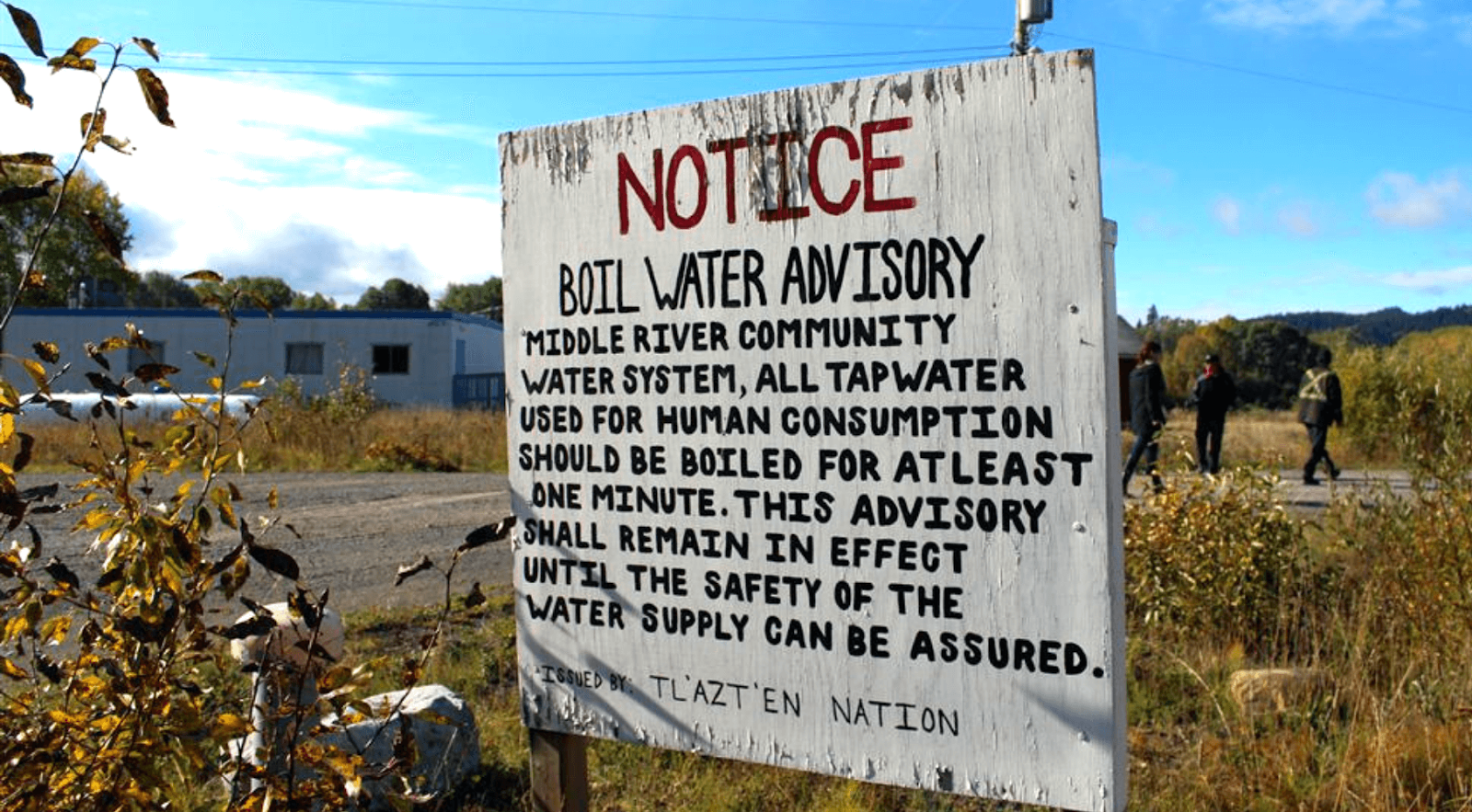
First Nation Boil Water Advisories
Boil water advisory sign in a remote community—symbolizing the urgent need for solutions like Aarvish's.
Pilot Project: Deploying in a Northern Manitoba Community
Project Overview: A 6–12 month pilot in a fly-in community like Shamattawa First Nation (under long-term advisory since 2018, impacting 170 homes).
Implementation Steps:
- Site Assessment: Evaluate humidity, wind (5–8 m/s avg.), and existing sources.
- Deployment: Install 10kW hybrid unit (AWG + RO + wind mill) in 4–6 weeks.
- Operation: Produce 8,000L/day, serving homes and a facility; train 5 local operators.
- Monitoring: IoT dashboards track quality (WHO standards), yield, and energy.
Measurable Outcomes:
- Water Security: Lift advisory dependency; provide alkaline drinking water and household supply.
- Cost Reduction: Slash trucking by 80% ($150K+ savings in pilot).
- Community Benefits: Health improvements, job creation, reduced hardship.
- Challenges Mitigated: Contingency for low wind (solar backup); risk assessment per business plan (e.g., maintenance protocols).
This pilot demonstrates "a focused, measurable approach" to scale across Manitoba.
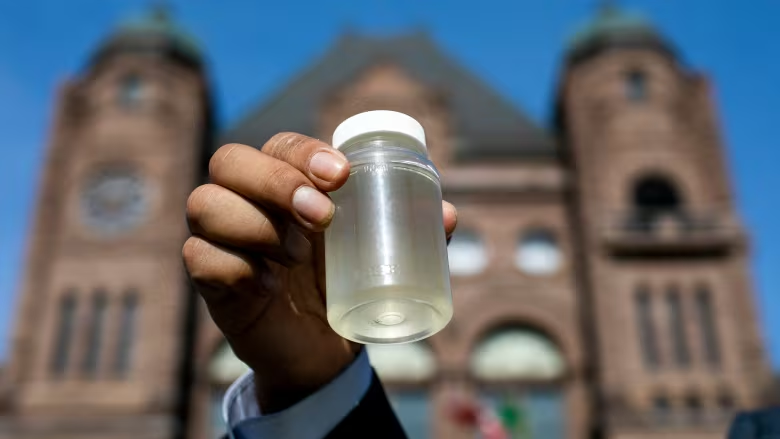
Sample of contaminated water from a First Nation reserve—highlighting the health risks Aarvish addresses.
Broader Impacts and Future Pathway
- Social Impact: Empowers Indigenous communities with sovereignty—aligning with MMF registration and your mission of "Indigenous-led economic development."
- Policy Alignment: Supports federal goals (132 long-term advisories lifted since 2015, but gaps remain). Advances Manitoba's climate priorities.
- Scalability:
- Phase 1: Pilot success.
- Phase 2: Expand to 10+ communities.
- Phase 3: Neighboring provinces.
- Challenges: Initial funding, regulatory approvals—mitigated via partnerships.
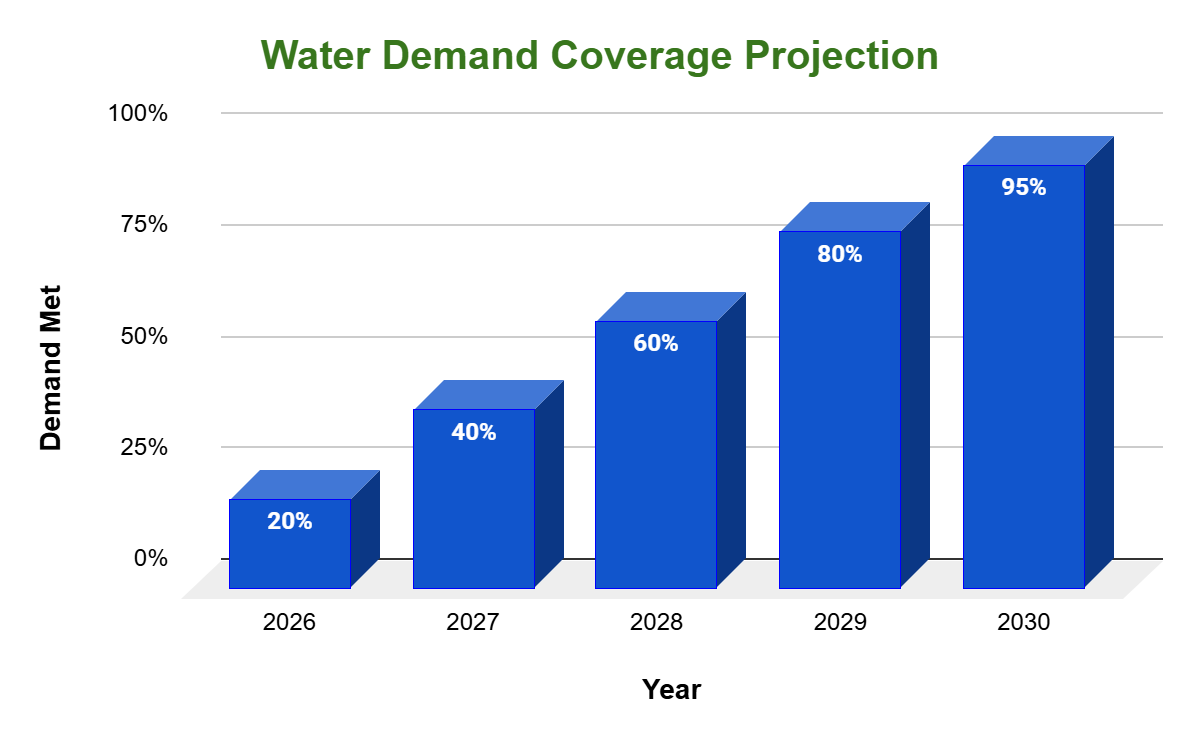
Rural Manitoba Water Demand Coverage Projection:
Conclusion: Engineering a Thirst-Free Manitoba
Manitoba's water crisis persists, but Aarvish's decentralized innovation offers a resilient, sustainable path forward. By harvesting air and renewables, we turn challenges into opportunities—delivering clean water where it's needed most.

Ready to pilot this in your community? Contact us at operations@aarvish.ca or +1 (204) 962-3844 for a free assessment. Let's build water security together.